Carpenter in Anaheim, CA: Wood Rot, Structure & Finish Work
Anaheim Carpentry is a local residential carpentry shop serving homeowners searching for a carpenter near me in Anaheim, Fullerton, Orange, Garden Grove and Santa Ana. We work on the full range of wood carpentry: structural repair and framing, damage from rot and insects, and finish carpentry including trim, doors, cabinets and custom built-ins. Our carpenters know the building stock here, Victorian cottages and Craftsman bungalows in the Anaheim Colony on shallow wood foundations, post-war ranch homes wrapped in stucco, and the two-story tract homes climbing into Anaheim Hills and Peralta Hills with big cantilevered decks. We understand how this housing stock settles, how water finds its way into sills and fascia, and what the inland sun and Santa Ana winds do to paint and exposed wood over time.
When you call Anaheim Carpentry, the same carpenters who quote your job do the work. We read wood pathologies honestly rather than dramatizing them, propose repair before replacement whenever the wood justifies it, and explain what we find and why. Whether you have noticed soft spots in a deck frame, discovered termite damage during a pest inspection, or your floor has gone noticeably soft or out of level, call (714) 683-2810 to schedule a free wood rot inspection and get a straightforward estimate.
Why Wood Fails in Anaheim, and How We Read It
Wood fails in Anaheim for specific reasons tied to our climate and building practices. Dry rot is a fungus that requires sustained moisture, not standing water, but the slow seeping that happens when sprinklers soak a planter bed against a sill plate, when rain sits behind tired fascia trim, or when a deck ledger is fastened directly to a rim joist without a moisture barrier. The fungus breaks down the wood's structure from inside while the paint film above may still look intact. Wet rot occurs at thresholds, window sills, door frames and the base of exterior trim where water collects and does not dry quickly. Drywood termites swarm into attics, eaves and window casings during their flight season, hollowing framing members from the inside. Subterranean termites work up from the soil into sill plates and the lowest floor joists in older homes on shallow crawlspaces. All of these damage modes share one thing: the wood looks sound on the surface until a probe or a careful inspection reveals the hollow interior.
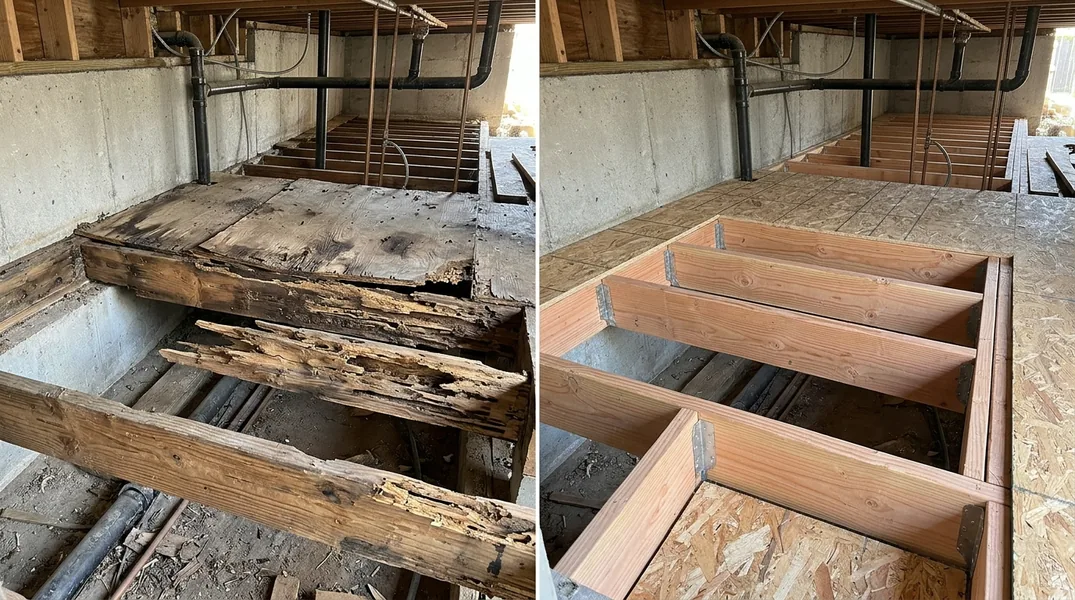
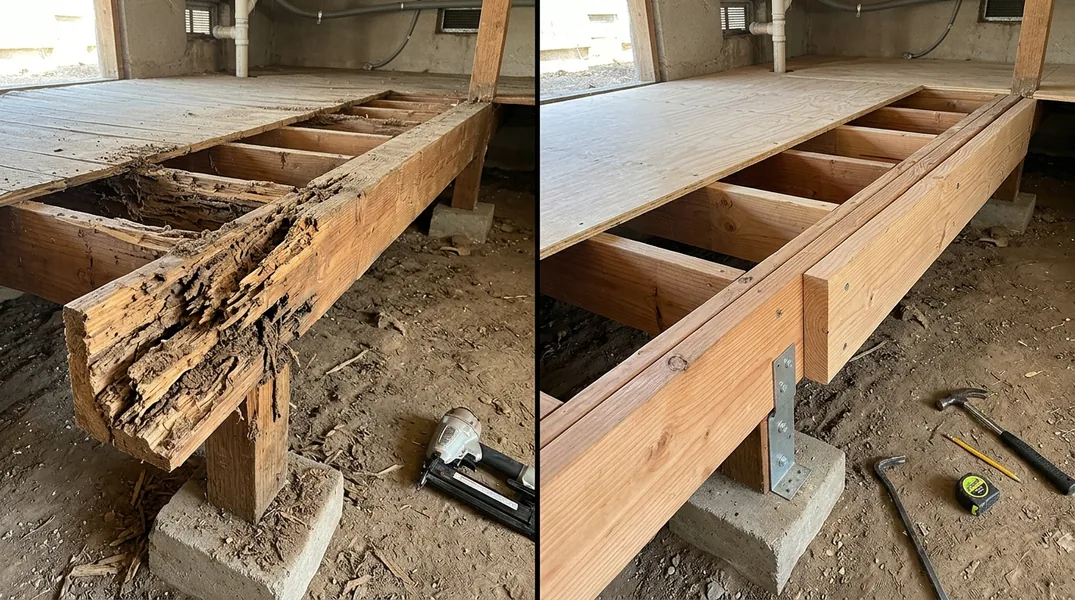
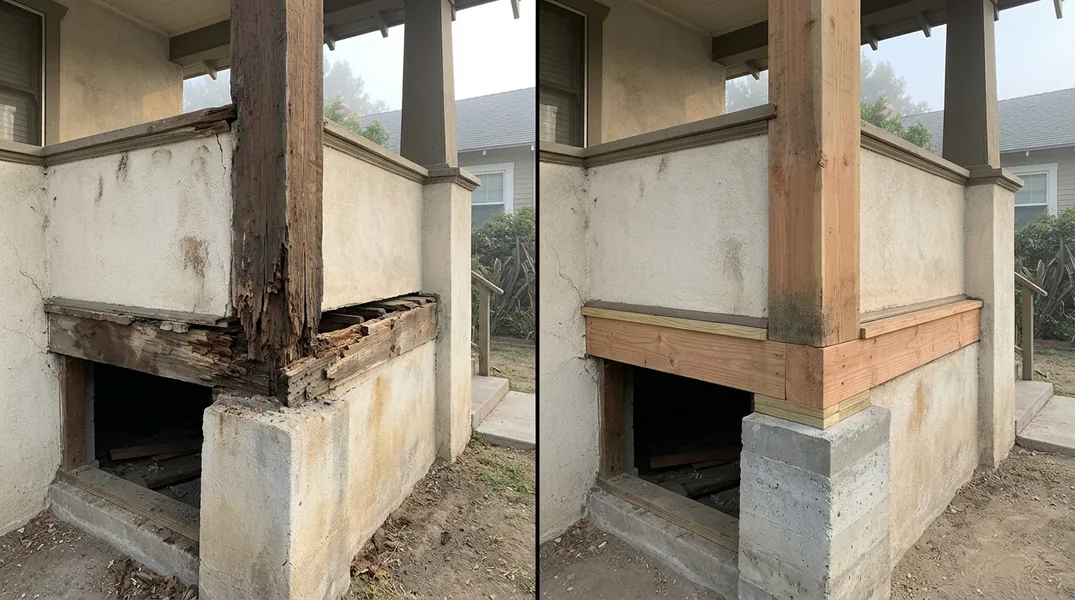
We assess rot and insect damage by probing to find where sound wood begins, by checking the framing and structure behind the visible surface, and by tracing the water path that fed the decay. A member with cosmetic surface softening over sound wood can be cut out and rebuilt with matching grain and finish. A joist or sill that has lost its structural section gets replaced. And here is the honest call that matters most: if the water source is not closed, the repair fails again. Filler over rot is not a repair. It is the beginning of a second failure. When you have had a pest inspection that documents termite or beetle damage, we repair and replace the damaged wood, working from your inspector's report. What we do is replace the wood that insects have damaged, so your framing is sound again. Call (714) 683-2810 or request a free wood rot inspection to have your damage assessed by someone who will tell you what you actually have and what it costs to fix.
The key to reading wood damage is understanding that cosmetic decay and structural failure are not the same thing. A board with soft spots on its outer inch may be perfectly sound at its core and worth repairing. A member that has lost half its depth or width is compromised and needs replacement. We quote both options honestly when both are real, and we explain the cost difference and the durability of each choice. Wood rot and dry rot repair and termite damage repair follow the same principle: diagnose the pathology, close the water path, and repair or replace the wood based on what it can still do.
Structural Carpentry in Anaheim: Joists, Beams and Settling
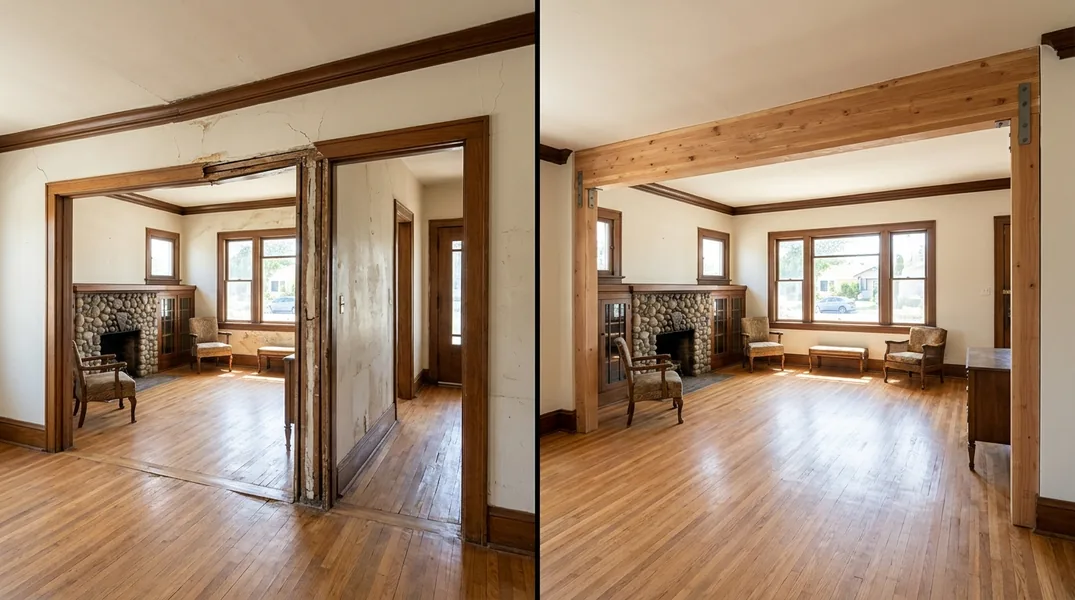
Structural carpentry in Anaheim homes often begins with a floor that feels soft underfoot, bouncy, or noticeably out of level. A century-old Craftsman bungalow or a fifty-year-old ranch home has settled, that is the normal condition here. Sloping floors and sticking doors are usually the result of slow, even settling rather than active failure. What matters is whether something is still moving and whether the members bearing the load are still sound. Floor joist and subfloor repair may mean sistering a joist to a weakened member, replacing a section of subfloor, or rebuilding a sill plate and rim joist where they meet the foundation. We assess whether the existing framing can be reinforced or whether replacement is the only honest answer. Beam replacement and load-bearing wall removal are more complex work. Beam sizing and any alteration to a load-bearing wall commonly require drawings and calculations from a licensed structural engineer, along with a permit from the local building department. We build to those engineered drawings rather than produce them ourselves. We do not offer structural engineering services or load calculations, that is a specialized trade. What we do is frame and install the structural members that an engineer has specified, making sure the work is built square and true.
Beam replacement and load-bearing wall removal also require framing and structural carpentry that ties the new structure to existing framing, manages the load path, and leaves no gaps or weak points. We know the building stock here, the solid Douglas fir and redwood in older homes, the lighter framing in post-war tracts, the mix of materials in homes that have been added to over decades. Settling is normal. Repair and reinforcement are the first choice. Replacement happens when the wood no longer has the section or the integrity to do its job.
Finish Carpentry and Built-Ins in Anaheim Homes
Finish carpentry in Anaheim homes is where craftsmanship becomes visible. Crown molding, baseboard, casing around doors and windows, wainscoting and custom built-ins are the details that make a room feel finished and intentional. The homes here have distinct character, bay windows in the Craftsman cottages, compact floor plans that need every inch of storage, out-of-square openings that have settled over a century, and original millwork in period homes that is worth matching rather than replacing. We install trim using coped joints instead of caulked corners, we scribe trim to walls that are neither flat nor plumb, we hold consistent reveals, and we match profiles to existing woodwork so additions look like they belong. Crown molding and baseboard installation, custom built-ins and shelving, and cabinet and vanity installation all begin with understanding what the house already has and what it needs.
Interior door installation, exterior and entry doors, stair and railing repair, and deck and porch repair round out the finish work we do. Doors need jambs that are square and plumb, hinges that are spaced right, and hardware that works smoothly for years. Stairs need treads that do not creak, stringers that are sound, and railings that are safe and true. Decks need ledgers that are properly flashed, joists that are sized for the span and the load, and railings that meet code. Each of these jobs is about reading the existing condition, understanding what the house needs, and building or repairing it with the same care that went into the original work.
Permits, Repair-or-Replace & What We Do Not Do
Whether your project requires a permit depends on the scope and your local building department's requirements. In most jurisdictions, a permit is commonly required for structural work such as removing or altering a load-bearing wall, replacing beams or joists, and altering stairs or exterior decks. Permits are also often required for major framing changes or additions. The thresholds and procedures vary by city and county. We can explain what kind of work typically needs a permit and help you understand what to expect, but requirements vary and must be verified with your local authority before starting. Always check with the Anaheim building department to confirm what applies to your specific project.
The decision between repair and replacement comes down to three factors: how much sound section is left in the member, whether the water source or damage path can be closed, and what the two options cost compared to each other. We quote both when both are real options and explain the durability and cost of each. On insurance claims, we can help document the damage for your claim, but we cannot promise that a claim will be approved or that work will be covered, that is between you and your carrier. We are fully insured, and we recommend that you verify any contractor's insurance and credentials yourself. Requirements vary, always verify with the Anaheim building department before starting your project. Call (714) 683-2810 or use our contact page to discuss your specific situation and get a clear estimate.