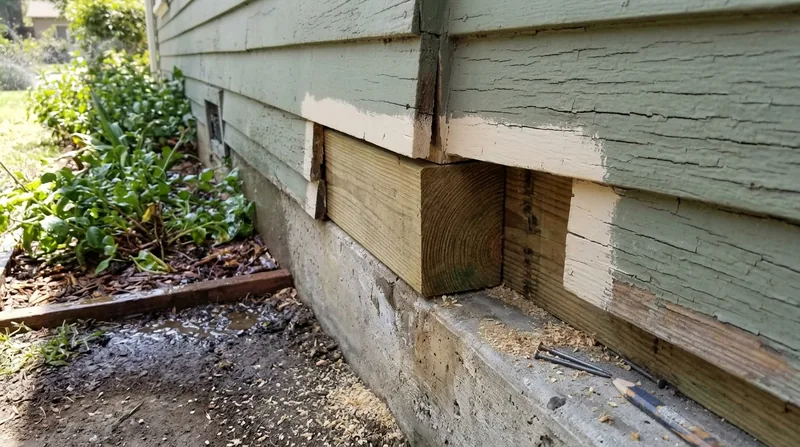




Anaheim's sprinkler systems, winter rains, and marine-layer moisture work quietly into the wood of Colony bungalows, West Anaheim ranches, and hillside homes. Decayed siding, trim, floor joists, and fascia don't announce themselves until the damage is deep. Wood rot and dry rot repair means cutting out the compromised wood, treating the surrounding framing, and rebuilding with rot-resistant lumber. This is a permanent repair, not a cosmetic patch. We work on the original Victorian cottages around downtown Anaheim, the 1950s stucco-and-wood tracts spreading across the city, and the two-story canyon homes of Anaheim Hills and Peralta Hills. If you've noticed soft spots in your siding, a spongy subfloor, or staining around window frames and door jambs, decay is already present and growing. The sooner you address it, the less wood you'll need to replace.
Why Wood Rot and Dry Rot Matter in Anaheim's Diverse Housing Stock
Anaheim's oldest homes sit on shallow crawlspaces where sill plates, rim joists, and floor framing stay open to soil moisture and pest pressure. Younger ranch homes rest on slabs but wrap their wood framing and trim in stucco, trapping moisture behind it. The real enemies here are not freezing winters but persistent dampness from landscape irrigation, morning marine-layer fog in early summer, and short winter storms that drive rain behind tired caulking and trim. Drywood termites swarm into attics and eaves; subterranean termites work up from the soil. Sprinklers soak siding along planter beds. Fascia and rafter tails, exposed to hard inland sunshine and dry Santa Ana winds, crack and allow water penetration. Decks cantilevered over Anaheim Hills slopes face seasonal moisture cycling and direct sun exposure. Left untreated, decay spreads into the structural framing, compromising the integrity of walls, floors, and load-bearing members.
- Identify soft, crumbly wood in siding, trim, fascia, or floor joists before the damage reaches structural members.
- Address moisture sources such as broken gutters, landscape irrigation, or failed caulk around windows and doors.
- Replace decayed wood with pressure-treated lumber or naturally rot-resistant species to prevent recurrence.
- Treat surrounding wood with a wood preservative to arrest decay in framing not yet visibly damaged.
- Document the damage for your insurance claim if the decay is tied to a sudden event such as a storm or plumbing leak.
Early detection and permanent repair save thousands in structural carpentry and framing work down the road.
Key info: Colony bungalows in downtown Anaheim often have original wood siding and trim dating to the 1890s and early 1900s. These homes are prized for their character, but their raised foundations and thin exterior walls make them vulnerable to termite activity and moisture intrusion. We repair and stabilize the original framing whenever possible, preserving the home's integrity and authenticity.
For more on structural damage from termite activity, see our termite damage repair page. If decay has reached your floor joists or subfloor, we also handle floor joist and subfloor repair.
How We Repair Wood Rot and Dry Rot in Anaheim Homes
Our process begins with a thorough inspection. We probe suspect wood with a sharp tool to find the soft, decayed areas. We identify the moisture source, whether it's a leaking gutter, a broken downspout, landscape irrigation spraying against the house, or a failed window seal. We then remove all visibly decayed wood, cutting back to sound framing. We treat the exposed wood with a wood preservative to arrest decay in the surrounding lumber. Finally, we rebuild the damaged section with pressure-treated lumber, naturally rot-resistant species such as redwood or cedar, or composite materials rated for the application. The goal is a repair that lasts decades, not a temporary patch that masks the problem.
- Inspect the damage with hand tools and probes to determine the extent of decay in framing and trim.
- Identify and document the moisture source so you can address it and prevent recurrence.
- Remove all soft, crumbly, or structurally compromised wood, cutting back to firm material.
- Apply wood preservative to the surrounding framing to stop decay from spreading into sound wood.
- Rebuild the damaged area with pressure-treated lumber, redwood, cedar, or other rot-resistant species matched to the application.
- Prime and paint or finish the repair to blend with the existing trim and protect the new wood.
For structural damage affecting floor joists, beams, or load-bearing walls, we work with the scope of the repair and recommend professional assessment when necessary.
Example: A home in Garden Grove had soft fascia and rafter tails at the overhang of its 1960s ranch. Water was pooling in the gutter and backing up under the soffit. We removed 8 linear feet of decayed fascia and soffit, treated the rafter tails with preservative, and rebuilt with pressure-treated lumber and new aluminum fascia. The repair cost $1,400 and took one day. Without repair, the decay would have spread into the roof framing and attic, a much larger and costlier job.
See our fascia and soffit repair page for more on protecting your eaves.
Wood Rot and Dry Rot Repair Methods and When to Use Each
| Approach | Description | Best for |
|---|---|---|
| Localized Removal and Replacement | Cut out decayed wood, treat surrounding framing, rebuild with pressure-treated or rot-resistant lumber, and refinish to match existing trim. | Soft spots in fascia, siding, trim, window sills, door frames, and small sections of rafter tails or floor joists. |
| Sistering or Reinforcement | Where decay is light or affects only one face of a floor joist or beam, bolt a new pressure-treated member alongside the damaged one to share the load and arrest further decay. | Partial decay in structural members where removal would compromise framing or require temporary support and engineering. |
| Full Member Replacement | Remove a decayed floor joist, beam, or sill plate entirely and install a new pressure-treated member of the same size and grade, using temporary support and proper fastening. | Extensive decay affecting the entire cross-section of a structural member, or decay in critical load-bearing framing. |
| Moisture Control and Preventive Treatment | Repair gutters, downspouts, grading, and caulking; apply wood preservative to framing in crawlspaces or attics; improve ventilation to reduce humidity. | Homes with chronic moisture problems, early-stage decay, or wood framing at risk of future deterioration. |
The right approach depends on the extent of decay, the structural role of the member, and whether the damage is isolated or part of a broader moisture problem.
Wood Rot and Dry Rot Repair Cost in Anaheim: What to Expect
Wood rot and dry rot repair in Anaheim typically starts at $650 for a localized area of soft siding or trim on a single-story home with good access. That price covers removal of the decayed wood, treatment of the surrounding framing, and installation of new pressure-treated or naturally rot-resistant lumber. Larger jobs, such as replacing multiple linear feet of fascia, repairing deck framing, or addressing decay in floor joists or sill plates, run $1,200 to $3,500 or more depending on the scope. Full replacement of a structural member such as a beam or floor joist, especially if temporary support or sistering is required, can exceed $5,000. Several factors move the cost up: the extent of decay, the accessibility of the damaged wood, whether the repair involves structural members that require temporary support, the species and grade of replacement lumber, and whether moisture sources need to be addressed to prevent recurrence.
We recommend getting 2 to 3 estimates before committing to a contractor. Each estimate should include a clear description of what wood is being removed, what will be installed in its place, and whether the repair includes treatment of surrounding framing and moisture control. Our estimates are free and come with a response within 24 hours. Call (714) 683-2810 to schedule an inspection, or visit our pricing page for more detail on how we calculate costs for different job types.
If decay has spread into structural members such as floor joists, beams, or load-bearing walls, the repair may require temporary support, new framing, and possibly a permit from the City of Anaheim Building Department. We can help you understand the scope and coordinate with the permitting process.
Wood Rot and Dry Rot Repair Near Me: What Anaheim Homeowners Should Know When Hiring a Carpenter
Finding a reliable carpenter for wood rot and dry rot repair requires more than a quick online search. Look for a contractor who is fully insured and willing to provide references from recent jobs in your neighborhood. Ask to see examples of past repairs, especially on homes similar to yours. A good carpenter will explain the cause of the decay, show you the extent of the damage, and walk you through the repair plan before starting work. They should be able to identify moisture sources and recommend how to prevent recurrence. If the repair involves structural members or requires a permit, confirm that the contractor understands local building codes and can work with the City of Anaheim Building Department. If your home is in a historic district or subject to HOA rules, verify that the contractor is familiar with those restrictions and can match materials and finishes appropriately.
- Confirm that the contractor is fully insured and can provide a certificate of insurance upon request.
- Ask for at least three references from homeowners in Anaheim, Fullerton, Orange, or nearby areas where similar work was completed in the past two years.
- Request a detailed written estimate that names the wood being removed, the replacement material, and the method of repair.
- Verify that the contractor understands permit requirements if the repair involves structural members or is subject to historic preservation rules.
- Confirm that the estimate includes treatment of surrounding wood to arrest decay and a plan to address the moisture source.
- Check whether the contractor offers a warranty on the repair work and for how long.
A carpenter who takes time to understand your home's history, construction, and moisture challenges is worth the conversation. Contact us at our contact page or call (714) 683-2810 to discuss your repair and get a free estimate with no obligation.
Wood Rot & Dry Rot Repair in Anaheim: Pricing Guide
| Service | Price | Details |
|---|---|---|
| Soft siding or trim repair | Starting at $650 | Removal of decayed wood, treatment of surrounding framing, and replacement with pressure-treated lumber, including finish and paint |
| Fascia, soffit, or rafter tail repair | Starting at $1,200 | Removal of decayed fascia and soffit, treatment of rafter tails, and installation of new pressure-treated lumber and aluminum or wood fascia |
| Floor joist or sill plate repair | Starting at $1,800 | Localized decay removal, sistering or partial replacement of structural members, temporary support, and treatment of surrounding framing |
| Full beam or structural member replacement | On estimate | Complete removal and replacement of load-bearing members requires site inspection, temporary support design, and coordination with building permits |
| Travel and inspection | Included | No separate mileage fee or travel charge in Anaheim and surrounding service areas, included in the estimate |
| Free estimate | Free | Response within 24 hours at (714) 683-2810, no obligation to book, detailed written proposal with materials and method |
Indicative pricing, the exact cost depends on square footage, finish, and site access. Free personalized estimate within 24h at (714) 683-2810.


