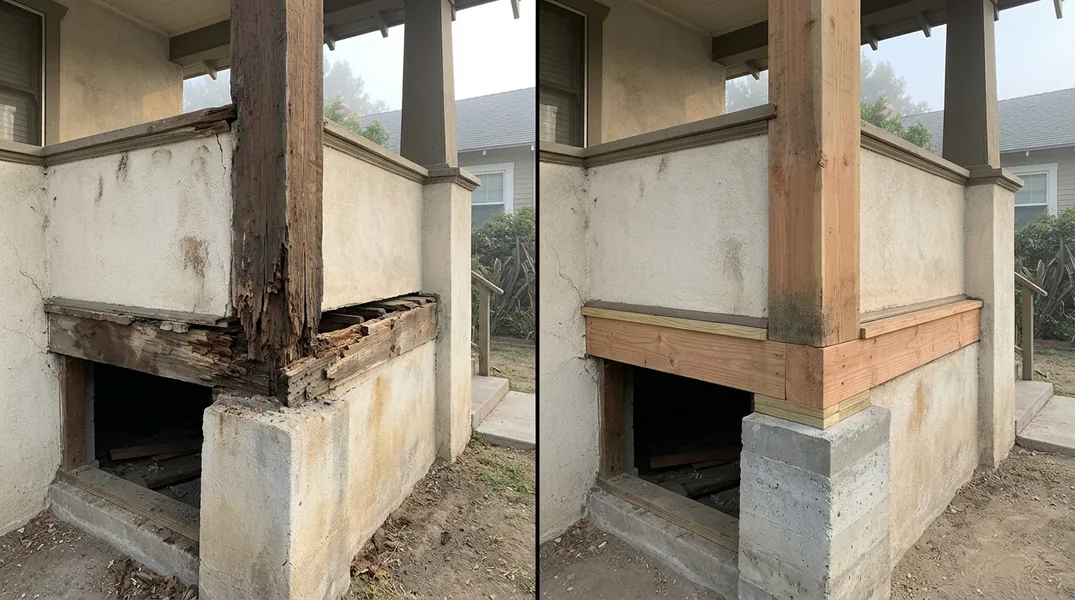
Why Anaheim's Historic Homes Face Unique Wood Challenges
If you own a Craftsman bungalow or Victorian cottage in Anaheim, you already know that older homes have character that new construction simply cannot replicate. The original hardwood floors, built-in cabinetry, exposed beams, and handcrafted details tell a story of early 20th-century craftsmanship. But that same age comes with a responsibility: protecting the wood that holds your home together.
Anaheim's climate, with its warm, dry summers and occasional moisture-heavy winters, creates an ideal breeding ground for wood rot and dry rot. Unlike newer homes built with pressure-treated lumber and modern moisture barriers, historic homes were constructed with solid-growth timber that, while beautiful and durable, is now over 100 years old. Moisture intrusion from aging roofs, compromised siding, or foundation seepage can silently compromise the structural integrity of your home. The good news is that understanding these risks and taking preventive action can preserve your home's integrity and value for generations to come.
Understanding Wood Rot vs. Dry Rot: What's Actually Happening?
Many homeowners use the terms interchangeably, but wood rot and dry rot are distinct problems that require different approaches. Wet rot, often called wood rot, occurs when wood is exposed to prolonged moisture and fungal spores. You'll typically notice soft, spongy wood that feels damp to the touch, often accompanied by a musty smell. This type of damage is common in Anaheim bungalows with aging roof flashings, rotted fascia boards, or compromised window frames. Wet rot tends to stay localized and is often easier to address if caught early.
Dry rot, on the other hand, is far more insidious. Despite its name, it requires moisture to start, but then it can spread through wood even in seemingly dry conditions. The fungus Serpula lacrymans breaks down the wood's structural integrity, leaving behind a brittle, cracked surface that crumbles easily. A single area of dry rot can spread across multiple rooms, traveling through structural members and hidden cavities. This is why Wood Rot & Dry Rot Repair in historic homes demands immediate professional attention. If you notice cracked, brittle wood, a musty basement smell, or wood that crumbles when you press it, do not delay in getting a professional assessment.
Historic Cottage Repair: Preserving Original Wood Siding
The exterior of your Victorian cottage or Craftsman bungalow is its first line of defense against moisture. Original wood siding, whether it's beveled lap siding, shiplap, or board-and-batten, is both beautiful and vulnerable. Unlike modern vinyl or fiber cement, authentic wood siding requires regular maintenance to remain protective. Paint failure, missing caulk, and gaps between boards are the most common culprits behind moisture infiltration that eventually leads to rot.
Wood Siding Repair on historic homes isn't just cosmetic. When you address compromised siding early, you prevent moisture from reaching the structural framing beneath. This might involve repainting with high-quality exterior paint, replacing individual boards that have begun to fail, or recaulking joints. The key is using materials and methods that respect the home's original construction while providing modern protection. Many homeowners in Anaheim are surprised to learn that their siding problems started not with the siding itself, but with clogged gutters or roof damage that allowed water to run down the exterior walls. A comprehensive exterior inspection can identify these upstream issues before they become expensive structural repairs.
Floor Joists and Subfloor Damage: Catching Problems Before They Spread
The structural frame of your historic home is hidden from view, which is precisely why it's so easy to ignore until problems become severe. Floor Joist & Subfloor Repair is one of the most common repairs needed in older homes because these components are exposed to moisture from multiple directions: foundation seepage, plumbing leaks, roof leaks that travel down interior walls, and even high humidity in crawl spaces.
You might first notice soft or bouncy floors, or see visible sagging in certain rooms. These are signs that the structural members supporting your home have begun to fail. In some cases, the damage is limited to the subfloor and can be addressed relatively straightforwardly. In other cases, the rot has penetrated the main floor joists, which are load-bearing and critical to your home's stability. This is when you need experienced professionals who understand both the structural requirements and the historic preservation principles that apply to your home. Ignoring this damage doesn't just create cosmetic problems; it can eventually compromise the entire foundation and structural system of your cottage or bungalow.
Historic Home Maintenance Anaheim: Your Year-Round Prevention Checklist
Prevention is always more affordable than repair. Establishing a regular maintenance schedule is the single best way to protect your investment and preserve your home's historic character. Begin with your roof and gutters. Inspect them twice a year, especially after winter rains. Clean gutters and downspouts so water flows away from your home, not into the foundation or down the exterior walls. Check for missing or damaged shingles and have them replaced promptly. Roof maintenance is the foundation of all other preservation efforts.
Next, walk the perimeter of your home and inspect all wood siding, trim, and window frames. Look for paint failure, cracks, gaps, or soft spots. Check that caulk around windows and doors is intact and flexible, not cracked or missing. Inspect the foundation for cracks or signs of moisture intrusion. Inside, check your basement or crawl space for water stains, mold, or musty odors. Test floors in corners and along exterior walls for softness or bounce. These simple inspections take a few hours but can identify problems when they're still manageable. If you discover damage, contact Anaheim Carpentry at (714) 683-2810 to discuss options before problems escalate.
When to Call a Professional: Wood Rot & Dry Rot Repair Near Me
Not every wood issue requires a specialist, but certain situations absolutely demand professional expertise. If you've discovered soft, spongy wood, visible fungal growth, or that distinctive musty smell associated with rot, do not attempt a DIY repair. Similarly, if damage affects structural members like floor joists, beams, or load-bearing walls, professional assessment is non-negotiable. Attempting to repair these components without proper knowledge can create safety hazards and may violate building codes.
The experts at Anaheim Carpentry have spent years working on historic homes throughout Anaheim, and they understand both the technical requirements of Wood Rot & Dry Rot Repair and the preservation principles that protect your home's character and value. They can identify the source of moisture intrusion, assess the extent of damage, and recommend repair methods that are both structurally sound and historically appropriate. Whether you need targeted repairs or more comprehensive restoration work, getting a professional free estimate is the smart first step. Call (714) 683-2810 to schedule an inspection and learn exactly what your home needs.
Looking for a professional carpentry contractor in Anaheim? Anaheim Carpentry responds fast for all your carpentry needs.
Get a Free QuoteOur services: Wood Rot & Dry Rot Repair · Termite Damage Repair · Floor Joist & Subfloor Repair