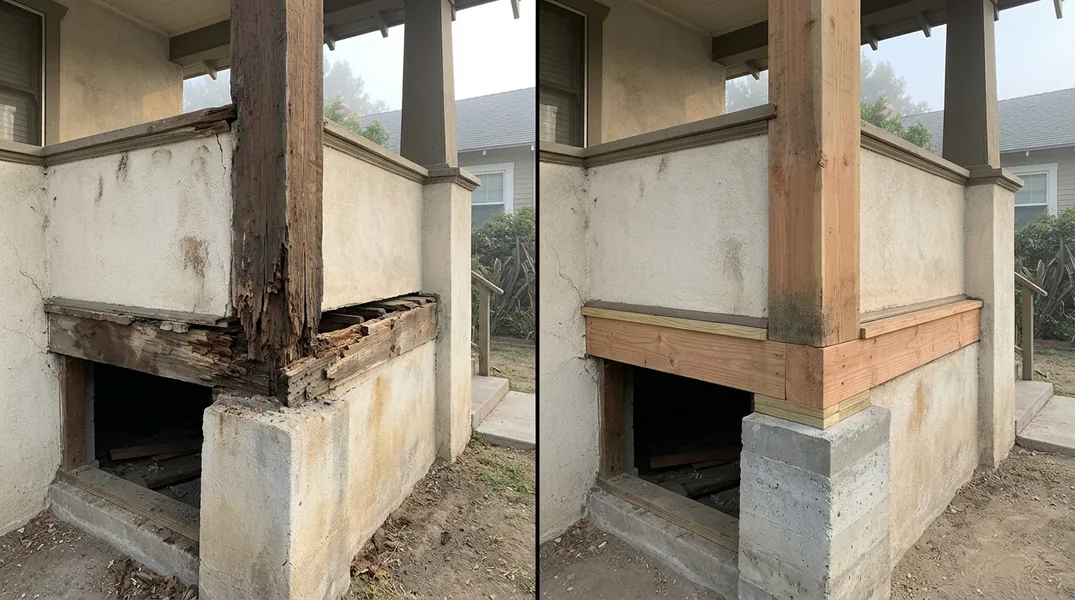
Why Is My Floor Sagging? Common Causes in Older Anaheim Homes
If you own an older home in Anaheim, you may have noticed your floors aren't quite as level as they used to be. That subtle dip or bounce underfoot isn't just annoying, it's a warning sign. Sagging floors develop over time when the structural support system beneath your home weakens, and the causes are often hiding right under your nose in the crawlspace.
The most common culprits behind sagging floors are Wood Rot & Dry Rot Repair issues, Termite Damage Repair needs, failed or undersized support beams, and moisture problems in crawlspaces. In Anaheim's climate, where humidity can be persistent even in older neighborhoods, wood deterioration happens quietly and steadily. By the time a homeowner notices the sag, the damage underneath is often significant.
Understanding what caused your floor to sag is the first step toward a permanent fix. A sagging floor isn't just a cosmetic problem, it's a structural one that can affect your entire home's integrity and safety. The good news is that with proper diagnosis and repair, sagging floors can be corrected and prevented from worsening.
Crawlspace Moisture and Rot: The Hidden Culprit
Most older homes have crawlspaces beneath them, and these areas are prime territory for moisture accumulation and wood decay. Poor ventilation, standing water, high humidity, and lack of vapor barriers create the perfect environment for both dry rot and wood rot to flourish. When moisture reaches the floor joists and support beams, the wood begins to soften and lose its structural strength. This is why a crawlspace inspection is often the first step in diagnosing a sagging floor problem.
Many homeowners in Anaheim don't realize their crawlspace is wet until they crawl down there and see visible mold, water stains, or soft, crumbly wood. By that point, the damage is already extensive. Dry rot, in particular, spreads silently through wood and can compromise floor joists that look solid on the surface. The wood loses density and can't bear the weight it's supposed to carry, leading to the gradual sag you feel in your living areas above.
The fix for moisture-related sagging involves two parts: addressing the moisture source and repairing or replacing the damaged structural members. Installing proper drainage, adding a vapor barrier, improving ventilation, and sometimes installing a sump pump can control moisture. Then the rotted wood must be removed and replaced with sound material.
Termite Damage and Structural Failure
Termites are another major cause of sagging floors in older homes, and they're especially common in Southern California. These wood-eating insects work from the inside out, creating galleries and tunnels that hollow out floor joists and support beams. A joist that looks intact on the outside can be 50 percent or more consumed on the inside. When termites have been active for years, the structural capacity of the wood is severely compromised.
Termite Damage Repair requires both pest control and structural carpentry. First, the termite infestation must be stopped by a licensed pest control professional. Then, a qualified carpenter must assess which joists and beams can be treated or reinforced and which must be replaced entirely. This is where techniques like sistering floor joists come in. Sistering involves bolting a new, sound piece of lumber alongside a damaged joist to restore load-bearing capacity. In cases where the damage is too severe, full replacement is necessary.
If you suspect termite damage, don't delay. The longer termites work, the more structural members they compromise, and the more expensive the repair becomes. Early detection and swift action can mean the difference between a sistering repair and a complete floor system replacement.
Floor Joist and Beam Repair: Sistering and Replacement
Floor Joist & Subfloor Repair is one of the most common solutions for sagging floors. Once the underlying cause (moisture, rot, or termites) is addressed, the damaged or undersized joists need to be reinforced or replaced. Sistering is a proven method where a new joist is installed directly alongside the damaged one, and they're bolted together to act as a single, stronger unit. This technique is often preferred because it avoids the need to remove the subfloor and can be done relatively quickly.
Not all sagging requires sistering, however. Sometimes the original joists are simply undersized for the span they cover, especially in older homes built to older building codes. In these cases, adding support beams or installing new, properly sized joists may be the best solution. Beam Replacement & Load-Bearing Wall Removal work often goes hand in hand with floor joist repair, particularly if the main support beam in the crawlspace has failed or settled.
The repair process begins with a thorough structural assessment. A qualified carpenter will measure the sag, inspect the joists and beams, check for rot and pest damage, and determine the best repair strategy. In some cases, temporary support beams must be installed to hold the floor level while repairs are made. This is precision work that requires experience and proper engineering to ensure the floor is brought back to level safely and permanently.
How to Know If Your Floor Needs Professional Repair
Not every uneven floor needs immediate structural repair, but certain signs indicate that professional evaluation is urgent. If you notice a pronounced sag or dip, if floors slope noticeably toward one side of the house, or if you can see visible gaps between floorboards or between the floor and baseboards, those are red flags. Similarly, if you notice soft or bouncy spots, creaking that's gotten worse over time, or doors and windows that no longer close properly, structural movement is likely occurring.
To get a clear picture of what's happening beneath your home, the first step is a professional crawlspace inspection and structural assessment. This is where Anaheim Carpentry can help. We'll examine your floor system, identify the root cause of the sag, and provide you with a clear repair plan and pricing for the work needed. Many homeowners find that early intervention prevents costly problems down the road. If you're concerned about your floors, reach out for a free estimate or call us at (714) 683-2810 to schedule an inspection.
The longer a sagging floor problem goes unaddressed, the more structural members become compromised and the more expensive the repair becomes. What might have been a straightforward sistering job can escalate into a full beam replacement or even foundation work if neglected. Taking action now protects your home's value and your family's safety.
Getting Your Sagging Floor Fixed: Next Steps
If you've identified a sagging floor in your home, the next step is to have it professionally evaluated. Anaheim Carpentry specializes in diagnosing and repairing sagging floors caused by rot, termites, moisture, and structural failure. We serve homeowners throughout Anaheim and the surrounding areas, and we understand the specific challenges that older homes face in this region.
Our process is straightforward. We inspect your crawlspace and floor system, identify the underlying cause, and present you with repair options and honest pricing. We handle everything from moisture control and rot remediation to floor joist sistering and beam replacement. We work with you to find the solution that fits your budget and timeline while ensuring your home is safe and level again. Don't wait until a sagging floor becomes a safety hazard or a major expense. Contact Anaheim Carpentry today at (714) 683-2810 or request a free estimate online. We're here to help.
Looking for a professional carpentry contractor in Anaheim? Anaheim Carpentry responds fast for all your carpentry needs.
Get a Free QuoteOur services: Wood Rot & Dry Rot Repair · Termite Damage Repair · Floor Joist & Subfloor Repair